I was invited to appear this morning on Sky News to discuss Janet Smith's report on Jimmy Savile at the BBC. But the press conference launching the report went on for an hour or so longer than anticipated, and I never got an air.
You never know with these things where the conversation is going to go, but I'm not sure I would have had very much new to say in any event. I've written about Savile on a previous blog, as well as in a review of Dan Davis's biography. However, what I was planning on saying was this:
The stories about Savile were all over the music industry by the mid-1970s. Not the allegations that he was raping 10-year-olds, but the fact that he had a penchant for teenage girls and didn't bother much with the age of consent.
This was not unusual in the pop world. Anyone who knows anything about the history of rock 'n' roll should be able to come up with a couple of dozen names of those said to have similar taste. Admittedly, there was a difference between beautiful young rock stars and a seedy man in his fifties, but it's not one that is now - or was then - recognised in law.
Rumours aren't evidence, said Smith at the press conference this morning, and as a former judge, she would require evidence. But no one suggests action should be taken against Savile on the grounds of the rumours; merely that if they heard those rumours, then senior figures at the BBC should have made enquiries. At which stage, evidence might well have emerged.
It is possible, of course, that the BBC hierarchy never heard those rumours. And that may also be true of senior figures in the police force, the political world, the NHS, the charities, the local businesses, the prison service. Maybe none of them heard a whisper against him, and that's why they continued to work with him and to court his attention. But it seems a little unlikely.
Even more unlikely is that the newspapers didn't hear the rumours. Where were the investigative journalists? Where were the tabloids? Why did not one of them break ranks and pursue the story of Savile's abuse? If the allegation now being made against the BBC is that it turned a blind eye, then the same is surely true of Fleet Street.
Thursday, 25 February 2016

Sunday, 7 February 2016
Uh-oh, we're in trouble
For reasons that aren't entirely clear to me, I recently became fascinated by the idea of female vocal duos in British pop music. So I wrote a series of pieces tracing their history over a period of fifty years, from the Caravelles to the Cheeky Girls. The story starts here with the 1960s and '70s (including the Pearls, Snatch, Blonde on Blonde), continues here with the 1980s (Pepsi & Shirlie, Wee Papa Girl Rappers) and concludes here with the likes of Shakespears Sister, Shampoo and Alisha's Attic.


Thursday, 21 January 2016
Save Kneller Hall
I have a great fondness for the Royal Military School of Music, Kneller Hall - where I spoke only last November - and am saddened, though not surprised, to hear that the government is again trying to close it down. If you get a chance to sign this petition to save the place, it would be a good thing.
I've posted a piece about a previous attempt at closure here.
I've posted a piece about a previous attempt at closure here.
Tuesday, 5 January 2016
Hilary Benn: a press portrait
Following earlier portraits of John McDonnell and Theresa May, I've written a piece about Hilary Benn, who is currently being touted by bookmakers as the favourite to be the next leader of the Labour Party. The piece can be found here on the Lion & Unicorn website.


Tuesday, 29 December 2015
Uncle Bill: Discipline and sticky buns
I haven't posted anything here for a very long time. Partly this is because I've been busy, doing things that aren't suitable for a blog, and partly it's because when I have written something suitable, I've posted it elsewhere.
Here, for example, is a piece that I like very much about the broadcaster Bill Mitchell, who used to present children's programmes on BFBS radio in the 1960s and '70s. Unless you have experience of the British Army on the Rhine, you've extremely unlikely to have heard of him - but I think he's an intriguing figure anyway, and worth a few minutes of your time.
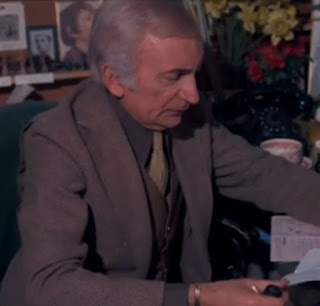
Here, for example, is a piece that I like very much about the broadcaster Bill Mitchell, who used to present children's programmes on BFBS radio in the 1960s and '70s. Unless you have experience of the British Army on the Rhine, you've extremely unlikely to have heard of him - but I think he's an intriguing figure anyway, and worth a few minutes of your time.

Wednesday, 11 November 2015
Armistice Day

I spent yesterday evening at the Royal Military School of Music, Kneller Hall, giving a talk on the Last Post as part of the Richmond Literary Festival. And very enjoyable it was too.
For those who missed my Radio 4 programme on the same subject, it is now available on iPlayer. And there's also an article I wrote for the BBC website to accompany the show.
And finally, on the occasion of Armistice Day, a further plug for my piece about the National Union of Ex-Servicemen, the most radical of the campaigning groups in the aftermath of the First World War. This was the organisation that effectively made Douglas Haig found the British Legion, so worried was he by their revolutionary potential.
Monday, 9 November 2015
National Union of Ex-Servicemen
One of the things that intrigued me when writing The Last Post was the role of the National Union of Ex-Servicemen. The NUX, as it was known, was by far the most radical, even revolutionary, of the veterans' groups that sprang up in the years immediately following the First World War. 'Instead of being the means to save capitalism,' declared the Union's general secretary, 'the organised ex-servicemen will now be the means of destroying it.'
Unfortunately, I had limited space to explore this in the book itself. So I've filled in some more details in an article about the NUX on the Lion & Unicorn website.

Unfortunately, I had limited space to explore this in the book itself. So I've filled in some more details in an article about the NUX on the Lion & Unicorn website.

Subscribe to:
Posts (Atom)